
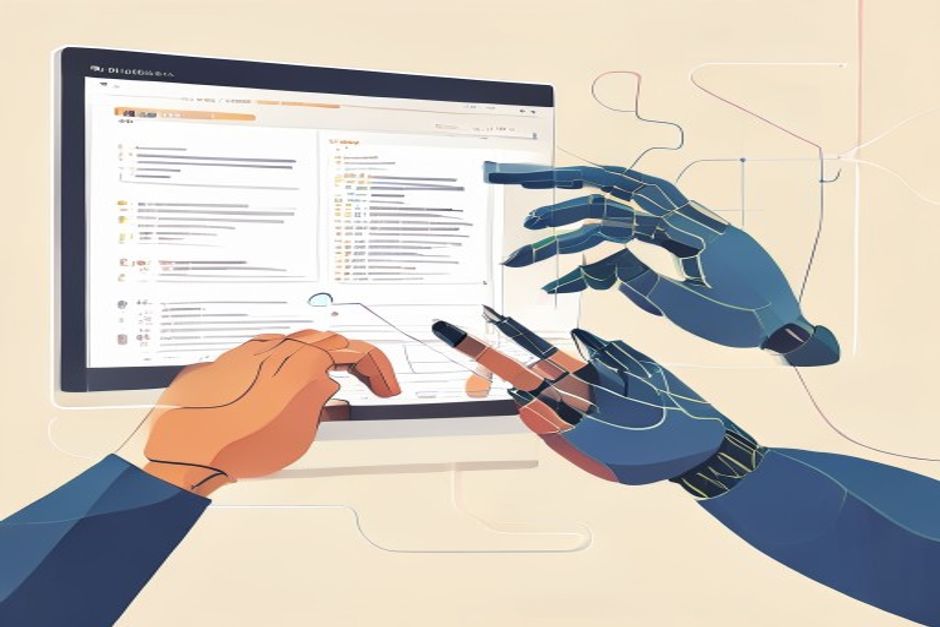
Code reviews are essential for maintaining quality, sharing knowledge, and catching bugs early. But honestly, they can also be a bottleneck and a bit of a drag. We all know the drill: spending time pointing out typos, style inconsistencies, or obvious security anti-patterns. These checks are important, sure, but they often distract from the deeper architectural discussions or complex logic reviews that truly need human eyes.
This is where AI-driven tools are starting to make a real difference. Not by replacing human reviewers, but by handling a lot of that grunt work. The idea isn't to automate the entire review process, but to augment it, making human reviews more efficient and focused.
What AI Can Actually Do
When we talk about AI in code reviews, we're mostly talking about advanced static analysis combined with large language models (LLMs). These tools are pretty good at spotting patterns and inconsistencies. Think of it like a super-powered linter that understands more context than your average ESLint config.
- Catching boilerplate issues: This is the low-hanging fruit. AI can flag style violations, naming convention issues, unused variables, and potential typos. It's like having a meticulous assistant who never gets bored of nitpicking.
- Identifying common anti-patterns: Many performance bottlenecks or security vulnerabilities stem from well-known anti-patterns. AI can be trained to recognize these, like insecure API key handling, SQL injection vulnerabilities, or N+1 query problems in ORM usage.
- Suggesting idiomatic code: For a given language or framework, there are often preferred ways to do things. AI can suggest more idiomatic constructs or library functions, helping maintain consistency across a codebase.
- Refactoring suggestions: It can sometimes identify complex methods or classes that might benefit from refactoring, suggesting ways to break them down or improve readability.
Integrating these checks into your CI/CD pipeline means many issues get caught before a human even looks at the pull request. This means fewer review cycles for basic stuff and cleaner code landing on a reviewer's desk.
The Unreplaceable Human Element
While AI can handle a lot, there's a huge chunk of code review that remains firmly in the human domain. This is the part where deep understanding, empathy, and strategic thinking come into play.
- Architectural decisions: AI can't evaluate if a new feature fits the long-term architectural vision or if a particular design pattern introduces unnecessary complexity for future scaling. That requires understanding the broader system and business goals.
- Complex business logic: Does this code accurately reflect the nuanced requirements of the business? Does it handle all edge cases in a way that makes sense for the user? AI might understand the syntax, but it doesn't understand the 'why' behind the logic.
- Context and intent: Why did the developer choose this particular approach? Was it a pragmatic trade-off for a tight deadline, or a deliberate long-term strategy? A human reviewer can ask these questions and provide constructive feedback that considers the constraints and goals.
- Mentorship and knowledge transfer: Code reviews are a fantastic opportunity for senior developers to mentor junior ones, explain best practices, and share institutional knowledge. This human interaction is invaluable and something AI can't replicate.
The annoying part is that AI tools, especially LLM-based ones, can sometimes generate plausible-sounding but incorrect explanations or suggestions. You still need a human to validate their output.
Limitations and Tradeoffs
It's important to be realistic about AI code reviews. They aren't magic, and they come with their own set of challenges.
One of the biggest issues is false positives. AI might flag something as an issue that, in context, is perfectly fine or even necessary. Tuning these tools to reduce noise without missing critical issues is a continuous effort. On the flip side, they can also miss subtle bugs that a human reviewer, with their deeper understanding of the system and domain, would catch. This is a classic precision vs. recall tradeoff.
Another point is over-reliance. If developers start assuming the AI will catch everything, they might become less vigilant in their own testing and review processes. The goal is to enhance, not diminish, human responsibility.
There's also the cost. Running advanced AI models, especially for a large codebase with many pull requests, isn't free. You need to weigh the potential savings in human review time against the infrastructure and API costs of the AI tools.
The Future is Collaborative
I wouldn't expect AI to take over code reviews entirely anytime soon. Instead, the most effective approach seems to be a collaborative one. Imagine a workflow where AI provides an initial pass, flagging all the low-level issues, suggesting minor improvements, and even generating an initial summary of changes.
Then, the human reviewer steps in. They get a cleaner, pre-vetted diff, allowing them to focus their energy on the architectural implications, the correctness of complex logic, and providing meaningful, growth-oriented feedback. This means human reviewers can spend less time on tedious checks and more time on high-value activities.
The actual benefit depends heavily on the type of codebase, team size, and development velocity. For large, mature projects with clear style guides and many contributors, AI can significantly streamline the process. For smaller, rapidly evolving projects or highly experimental code, the overhead of tuning and correcting AI might outweigh the benefits.
Ultimately, AI in code reviews is a powerful assistant, not a replacement. It's about making our existing processes more efficient, not eliminating the need for thoughtful human judgment.





Comments (0)
No comments yet. Be the first to leave a comment!
Verify Your Comment
We sent a 6-digit OTP code to . Please enter the code below to publish your comment.