
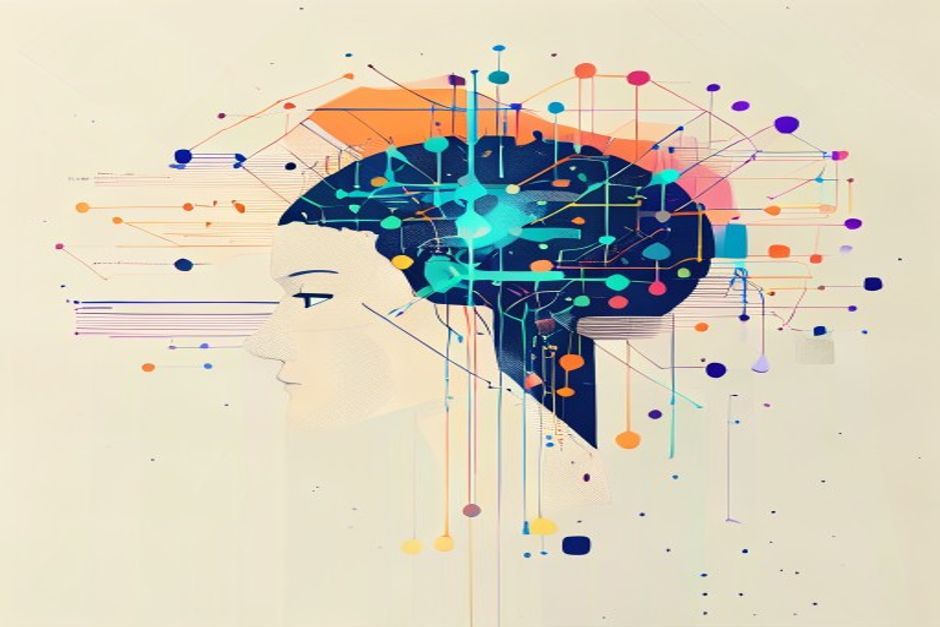
The Problem with AI's 'Understanding'
Large language models (LLMs) are incredible. They can write, summarize, and even generate code with surprising fluency. But talk to one about specific, interconnected facts, or ask it to reason across multiple pieces of information, and you quickly hit a wall. They might confidently make things up (hallucinate), or struggle to connect dots that seem obvious to a human. This isn't necessarily a failure of intelligence, but often a lack of structured context. LLMs excel at statistical pattern matching on vast text corpora, but they don't inherently 'understand' relationships or verify facts in the way a structured database does.
Consider a simple question: 'Who managed the team that developed Project Alpha, and what other projects did they lead?' An LLM might infer some answers from its training data, but it could easily get names, roles, or project associations wrong. It's pulling from patterns, not explicit facts about your organization's hierarchy and project history.
What Are Knowledge Graphs?
This is where knowledge graphs come in. At their core, a knowledge graph is a way to represent information as a network of interconnected entities (nodes) and their relationships (edges). Think of it like a semantic network where:
- Nodes represent real-world entities or concepts (e.g., 'Abhishek Jha', 'Project Alpha', 'Backend Team').
- Edges describe the relationships between these nodes (e.g., 'Abhishek Jha' manages 'Backend Team', 'Backend Team' developed 'Project Alpha').
- Both nodes and edges can have properties (e.g., 'Abhishek Jha' has a title 'Senior Engineer', 'Project Alpha' has a status 'Completed').
Unlike traditional relational databases, which rely on rigid, predefined tables and joins, knowledge graphs are designed for flexibility and expressing complex, evolving relationships. You navigate them by traversing connections, which is incredibly powerful for discovering hidden links and context.
How Knowledge Graphs Enhance AI Reasoning
Integrating knowledge graphs with AI models, especially LLMs, can fundamentally change how these systems understand and respond to queries. Here's how:
Providing Grounded Context
Instead of relying solely on an LLM's internal, fuzzy representation of facts, you can query a knowledge graph for precise, verified information. When a user asks a question, the AI can first consult the graph to retrieve relevant entities and their relationships. This structured context is then fed to the LLM, grounding its response in reality.
Enabling Deeper Reasoning
Knowledge graphs excel at multi-hop queries. You can ask for 'all employees who worked on projects related to Project Alpha and reported to Mark,' and the graph can traverse the 'worked on,' 'related to,' and 'reports to' relationships to find the answer. This kind of complex, chained reasoning is difficult for LLMs to achieve reliably on their own, but becomes straightforward when they can leverage a pre-computed graph traversal.
Reducing Hallucination
When an LLM's output is explicitly backed by facts retrieved from a knowledge graph, the likelihood of it fabricating information drops significantly. If the graph doesn't contain a specific fact, the AI can be instructed to state that it doesn't know, rather than guessing incorrectly.
Improving Explainability
The explicit relationships in a knowledge graph mean that if an AI provides an answer based on graph data, you can trace the exact path and connections it used. This offers a level of transparency and explainability that's often missing in opaque AI models.
Dynamic and Up-to-Date Knowledge
Retraining an LLM is expensive and time-consuming. Updating a knowledge graph, by adding or modifying nodes and edges, is comparatively lightweight. This means your AI can access the most current factual information without constant model retraining.
Integrating KGs with AI Systems
There are several practical ways to bring knowledge graphs into your AI architecture:
- Retrieval Augmented Generation (RAG): This is arguably the most common pattern. A user query triggers a search against the knowledge graph to retrieve relevant facts. These facts are then prepended to the user's prompt, providing the LLM with up-to-date, accurate context before it generates a response.
- Semantic Search: Knowledge graphs can power more intelligent search. Instead of keyword matching, you can search for concepts and relationships. For instance, searching for 'products compatible with XYZ' can traverse the graph to find all related products, even if 'XYZ' isn't explicitly mentioned in their descriptions.
- AI Agents and Planning: For more complex tasks, AI agents can use knowledge graphs as their 'memory' or 'understanding' of the world. An agent might query the graph to understand dependencies, identify available resources, or plan a sequence of actions.
- Prompt Engineering: Even without a full RAG system, you can manually or programmatically inject structured data from a knowledge graph into your prompts to guide the LLM's output.
The Catch: Building and Maintaining KGs
This all sounds great on paper, but there's a catch. Building and maintaining a robust knowledge graph isn't trivial. It requires:
- Data Ingestion: Extracting entities and relationships from unstructured text, existing databases, or APIs. This often involves NLP techniques and careful schema design.
- Schema Design: Defining the types of nodes, relationships, and properties in a way that accurately represents your domain and supports your intended queries.
- Data Curation: Ensuring the quality, consistency, and accuracy of the data within the graph.
- Scalability: For very large and dynamic datasets, managing graph databases and their query performance can become a significant engineering challenge.
I wouldn't reach for a knowledge graph by default for every AI problem. If your AI's context is simple and static, a basic vector database for RAG might be enough. But when you're dealing with complex, interconnected data where factual accuracy, multi-hop reasoning, and explainability are critical, knowledge graphs offer a powerful way to ground your AI in a structured, verifiable reality.
Final Thoughts
Knowledge graphs aren't a replacement for powerful AI models, but rather a powerful complement. They provide the scaffolding of explicit relationships and verifiable facts that can elevate an LLM from a sophisticated pattern-matcher to a more reliable, context-aware reasoning engine. When your AI needs to connect specific dots, understand complex domains, or explain its decisions, a knowledge graph can be the missing piece of the puzzle.





Comments (0)
No comments yet. Be the first to leave a comment!
Verify Your Comment
We sent a 6-digit OTP code to . Please enter the code below to publish your comment.